Approaches to Teaching World Literature
There are 173 products in Approaches to Teaching World Literature
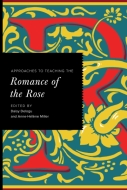
Approaches to Teaching the Romance of the Rose
One of the most influential texts of its time, the Romance of the Rose offers readers a window into the world view of the late Middle Ages in Europe, including notions of moral philosophy and courtly love. Yet the Rose also explores topics that remain relevant to readers today, such as gender, desire, and the power of speech. Students, however, can find the work challenging because of its dual authorship by Guillaume de Lorris and Jean de Meun, its structure as an allegorical dream vision, and its encyclopedic length and scope.
The essays in this volume offer strategies for teaching the poem with confidence and enjoyment. Part 1, "Materials," suggests helpful background resources. Part 2, "Approaches," presents contexts, critical approaches, and strategies for teaching the work and its classical and medieval sources, illustrations, and adaptations as well as the intellectual debates that surrounded it.
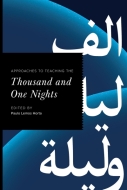
Approaches to Teaching the Thousand and One Nights
The Thousand and One Nights, composed in Arabic from the eighth to the fourteenth centuries, is one of the world's most widely circulated and influential collections of stories. To help instructors introduce the tales to students, this volume provides historical context and discusses the many transformations of the stories in a variety of cultures. Among the topics covered are the numerous translations and their impact on the tales' reception; various genres represented by the tales; gender, race, and slavery; and adaptations of the stories in films, graphic novels, and other media across the world and under conditions of both imperialism and postcolonialism. The essays serve instructors in subjects such as medieval literature, world literature, and Middle and Near Eastern studies and make a case for teaching the Thousand and One Nights in courses on identity and race.
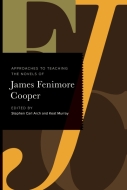
Approaches to Teaching the Novels of James Fenimore Cooper
A cosmopolitan author who spent nearly a decade in Europe and was versed in the works of his British and French contemporaries, James Fenimore Cooper was also deeply concerned with the America of his day and its history. His works embrace themes that have dominated American literature since: the frontier; the oppression of Native Americans by Europeans; questions of race, gender, and class; and rugged individualism, as represented by figures like the pirate, the spy, the hunter, and the settler. His most memorable character, Natty Bumppo, has entered into American popular culture.
The essays in this volume offer students bridges to Cooper's novels, which grapple with complex moral issues that are still crucial today. Engaging with film adaptations, cross-culturalism, animal studies, media history, environmentalism, and Indigenous American poetics, the essays offer new ways to bring these novels to life in the classroom.
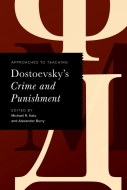
Approaches to Teaching Dostoevsky’s Crime and Punishment
Recounting the murder of an elderly woman by a student expelled from university, Crime and Punishment is a psychological and political novel that portrays the strains on Russian society in the middle of the nineteenth century. Its protagonist, Raskolnikov, moves in a world of dire poverty, disillusionment, radicalism, and nihilism interwoven with religious faith and utopianism. In Dostoevsky’s innovative style, which he called fantastic realism, the narrator frequently reports from within the protagonist’s mind. The depiction of the desperate lives of tradespeople, students, alcoholics, prostitutes, and criminals gives readers insight into the urban society of St. Petersburg at the time.
The first part of this book offers instructors guidance on editions and translations, a map of St. Petersburg showing locations mentioned in the novel, a list of characters and an explanation of the Russian naming system, and recommendations for further reading. In the second part, essays analyze key scenes, address many of Dostoevsky’s themes, and consider the roles of ethics, gender, money, Orthodox Christianity, and social justice in the narrative. The volume concludes with essays on digital media, film adaptations, and questions of translation.
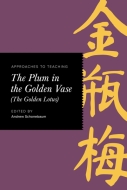
Approaches to Teaching The Plum in the Golden Vase (The Golden Lotus)
The Plum in the Golden Vase (also known as The Golden Lotus) was published in the early seventeenth century and may be the first long work of Chinese fiction written by a single (though anonymous) author. Featuring both complex structural elements and psychological and emotional realism, the novel centers on the rich merchant Ximen Qing and his household and describes the physical surroundings and material objects of a Ming dynasty city. In part a social, political, and moral critique, the novel reflects on hierarchical power relations of family and state and the materialism of life at the time.
The essays in this volume provide ideas for teaching the novel using a variety of approaches, from questions of genre, intertextuality, and the novel's reception to material culture, family and social dynamics, and power structures in sexual relations. Insights into the novel's representation of Buddhism, Chinese folk religion, legal culture, class, slavery, and obscenity are offered throughout the volume.
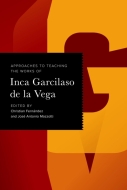
Approaches to Teaching the Works of Inca Garcilaso de la Vega
The author of Comentarios reales and La Florida del Inca, now recognized as key foundational works of Latin American literature and historiography, Inca Garcilaso de la Vega was born in 1539 in Cuzco, the son of a Spanish conquistador and an Incan princess, and later moved to Spain. Recalling the family stories and myths he had heard from his Quechua-speaking relatives during his youth and gathering information from friends who had remained in Peru, he created works that have come to indelibly shape our understanding of Incan history and administration. He also articulated a new American identity, which he called mestizo.
This volume provides guidance on the translations of Garcilaso's writings and on the scholarly reception of his ideas. Instructors will discover ideas for teaching Garcilaso's works in relation to indigenous thought, European historiography, natural history, indigenous religion and Christianity, and Incan material culture. In essays informed by postcolonial and decolonial perspectives, scholars draw connections between Garcilaso's writings and contemporary issues like migration, multiculturalism, and indigenous rights.
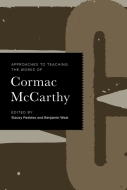
Approaches to Teaching the Works of Cormac McCarthy
In the decades since his 1992 breakout novel, All the Pretty Horses, Cormac McCarthy has gained a reputation as one of the greatest contemporary American authors. Experimenting with genres such as the crime thriller, the post-apocalyptic novel, and the western, his work also engages with the aesthetics of cinema, and several of his novels have been adapted for the screen. While timely and relevant, his works use idiosyncratic language and contain intense, troubling portrayals of racism, sexism, and violence that can pose challenges for students.
This volume offers strategies for guiding students through McCarthy’s oeuvre, addressing all his novels as well as his published plays and screenplays. Part 1, “Materials,” provides sources of biographical information and key scholarship on McCarthy. Essays in part 2, “Approaches,” discuss subjects such as landscape and ecology, mythologies of the American West, film adaptations, and literary contexts and describe assignments that encourage students to write creatively and to examine their personal values.
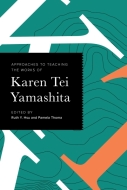
Approaches to Teaching the Works of Karen Tei Yamashita
Structurally innovative and culturally expansive, the works of Karen Tei Yamashita invite readers to rethink conventional paradigms of genres and national traditions. Her novels, plays, and other texts refashion forms like the immigrant tale, the postmodern novel, magical realism, apocalyptic literature, and the picaresque and suggest new transnational, hemispheric, and global frameworks for interpreting Asian American literature.
Addressing courses in American studies, contemporary fiction, environmental humanities, and literary theory, the essays in this volume are written by undergraduate and graduate instructors from across the United States and around the globe. Part 1, “Materials,” outlines Yamashita’s novels and other texts, key works of criticism and theory, and resources for Asian American and Asian Brazilian literature and culture. Part 2, “Approaches,” provides options for exploring Yamashita’s works through teaching historical debates, outlining principles of environmental justice, mapping geographic boundaries to highlight power dynamics, and drawing personal connections to the texts. Additionally, an essay by Yamashita describes her own approaches to teaching creative writing.
Approaches to Teaching Austen’s Persuasion
Jane Austen is a favorite with many students, whether they’ve read her novels or viewed popular film adaptations. But Persuasion, completed at the end of her life, can be challenging for students to approach. They are surprised to meet a heroine so subdued and self-sacrificing, and the novel’s setting during the Napoleonic wars may be unfamiliar. This volume provides teachers with avenues to explore the depths and richness of the novel with both Austen fans and newcomers.
Part 1, “Materials,” suggests editions for classroom use, criticism, and multimedia resources. Part 2, “Approaches,” presents strategies for teaching the literary, contextual, and philosophical dimensions of the novel. Essays address topics such as free indirect discourse and other narrative techniques; social class in Austen’s England; the role of the navy during war and peacetime; key locations in the novel, including Lyme Regis and Bath; and health, illness, and the ethics of care.
Approaches to Teaching Pound’s Poetry and Prose
Known for his maxim “Make it new,” Ezra Pound played a principal role in shaping the modernist movement as a poet, translator, and literary critic. His works, with their complex structures and layered allusions, remain widely taught. Yet his known fascism, anti-Semitism, and misogyny raise issues about dangerous ideologies that influenced his work and that must be addressed in the classroom.
The first section, “Materials,” catalogs the print and digital editions of Pound’s works, evaluates numerous secondary sources, and provides a history of Pound’s critical contexts. The essays in the second section, “Approaches,” offer strategies for guiding students toward a clearer understanding of Pound’s difficult works and the context in which they were written.
