Approaches to Teaching World Literature
There are 173 products in Approaches to Teaching World Literature
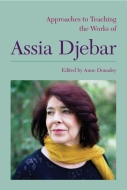
Approaches to Teaching the Works of Assia Djebar
A significant and prolific francophone writer and filmmaker, Assia Djebar is celebrated for her experimental, multilingual prose and her nuanced, imaginative representations of Algeria. From her first novel, La soif (The Mischief), to her final book, Nulle part dans la maison de mon père (“No Place in My Father’s House”), she offers a wealth of pedagogical and theoretical possibilities.
Part 1, “Materials,” presents valuable teaching resources, including biographical information, French- and English-language editions of Djebar’s writing, and secondary works. In part 2, “Approaches,” contributors address the issues of and controversy surrounding her oeuvre, drawing on a range of interdisciplinary approaches and classroom strategies. Topics in the volume include translation studies, Islamic feminism, colonial and postcolonial contexts, autobiographical writing, historiography, postmodern and avant-garde literary experimentation, and visual culture. Gayatri Chakravorty Spivak provides an afterword. This volume makes clear the political, intellectual, and artistic importance of Djebar.
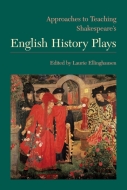
Approaches to Teaching Shakespeare’s English History Plays
Shakespeare’s history plays make up nearly a third of his corpus and feature iconic characters like Falstaff, the young Prince Hal, and Richard III—as well as unforgettable scenes like the storming of Harfleur. But these plays also present challenges for teachers, who need to help students understand shifting dynastic feuds, manifold concepts of political power, and early modern ideas of the body politic, kingship, and nationhood.
Part 1 of this volume, “Materials,” introduces instructors to the many available editions of the plays, the wealth of contextual and critical writings available, and other resources. Part 2, “Approaches,” contains essays on topics as various as masculinity and gender, using the plays in the composition classroom, and teaching the plays through Shakespeare’s own sources, film, television, and the Web. The essays help instructors teach works that are poetically and emotionally rich as well as fascinating in how they depict Shakespeare’s vision of his nation’s past and present.
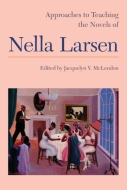
Approaches to Teaching the Novels of Nella Larsen
Nella Larsen’s novels Quicksand and Passing, published at the height of the Harlem Renaissance, fell out of print and were thus little known for many years. Now widely available and taught, Quicksand and Passing challenge conventional “tragic mulatta” and “passing” narratives. In part 1, “Materials,” of Approaches to Teaching the Novels of Nella Larsen, the editor surveys the canon of Larsen’s writing, evaluates editions of her works, recommends secondary readings, and compiles a list of useful multimedia resources for teaching.
The essays in part 2, “Approaches,” aim to help students better understand attitudes toward women and race during the Harlem Renaissance, the novels’ relations to other artistic movements, and legal debates over racial identities in the early twentieth century. In so doing, contributors demonstrate how new and seasoned instructors alike might use Larsen’s novels to explore a wide range of topics—including Larsen’s short stories and letters, the relation between her writings and her biography, and the novels’ discussion of gender and sexuality.
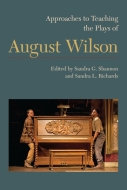
Approaches to Teaching the Plays of August Wilson
The award-winning playwright August Wilson used drama as a medium to write a history of twentieth-century America through the perspectives of its black citizenry. In the plays of his Pittsburgh Cycle, including the Pulitzer Prize–winning Fences and The Piano Lesson, Wilson mixes African spirituality with the realism of the American theater and puts African American storytelling and performance practices in dialogue with canonical writers like Aristotle and Shakespeare. Wilson’s plays, as they portray black Americans living through migration, industrialization, and war, explore the relation between a unified black consciousness and America’s collective identity.
In part 1 of this volume, “Materials,” the editors survey sources on Wilson’s biography, teachable texts of his plays, useful secondary readings, and compelling audiovisual and Web resources. The essays in part 2, “Approaches,” look at a diverse set of issues in Wilson’s work, including the importance of blues and jazz, intertextual connections to other playwrights, race in performance, Yoruban spirituality, and the role of women in the plays.
Approaches to Teaching the Works of Anton Chekhov
Chekhov’s works are unflinching in the face of human frailty. With their emphasis on the dignity and value of individuals during unique moments, they help us better understand how to exist with others when we are fundamentally alone. Written in Russia at the end of the nineteenth century, when the country began to move fitfully toward industrialization and grappled with the influence of Western liberalism even as it remained an autocracy, Chekhov’s plays and stories continue to influence contemporary writers.
The essays in this volume provide classroom strategies for teaching Chekhov’s stories and plays, discuss how his medical training and practice related to his literary work, and compare Chekhov with writers both Russian and American. The volume also aims to help instructors with the daunting array of new editions in English, as well as with the ever-growing list of titles in visual media: filmed theater productions of his plays, adaptations of the plays and stories scripted for film, and amateur performances freely available online.
Approaches to Teaching Sand’s Indiana
Indiana, George Sand’s first solo novel, opens with the eponymous heroine brooding and bored in her husband’s French countryside estate, far from her native Île Bourbon (now Réunion). Written in 1832, the novel appeared during a period of French history marked by revolution and regime change, civil unrest and labor concerns, and slave revolts and the abolitionist movement, when women faced rigid social constraints and had limited rights within the institution of marriage. With this politically charged history serving as a backdrop for the novel, Sand brings together Romanticism, realism, and the idealism that would characterize her work, presenting what was deemed by her contemporaries a faithful and candid representation of nineteenth-century France.
This volume gathers pedagogical essays that will enhance the teaching of Indiana and contribute to students’ understanding and appreciation of the novel. The first part gives an overview of editions and translations of the novel and recommends useful background readings. Contributors to the second part present various approaches to the novel, focusing on four themes: modes of literary narration, gender and feminism, slavery and colonialism, and historical and political upheaval. Each essay offers a fresh perspective on Indiana, suited not only to courses on French Romanticism and realism but also to interdisciplinary discussions of French colonial history or law.
Approaches to Teaching the Novels of Henry Fielding
The works of Henry Fielding, though written nearly three hundred years ago, retain their sense of comedy and innovation in the face of tradition, and they easily engage the twenty-first-century student with many aspects of eighteenth-century life: travel, inns, masquerades, political and religious factions, the ’45, prisons and the legal system, gender ideals and realities, social class.
Part 1 of this volume, “Materials,” discusses the available editions of Joseph Andrews, Tom Jones, Shamela, Jonathan Wild, and Amelia; suggests useful critical and contextual works for teaching them; and recommends helpful audiovisual and electronic resources. The essays of part 2, “Approaches,” demonstrate that many of the methods and models used for one novel—the romance tradition, Fielding’s legal and journalistic writing, his techniques as a playwright, the ideas of Machiavelli—can be adapted to others.
Approaches to Teaching Tolkien’s The Lord of the Rings and Other Works
A philologist and medieval scholar, J. R. R. Tolkien never intended to write immensely popular literature that would challenge traditional ideas about the nature of great literature and that was worthy of study in colleges across the world. He set out only to write a good story, the kind of story he and his friends would enjoy reading. In The Hobbit and in The Lord of the Rings, Tolkien created an entire world informed by his vast knowledge of mythology, languages, and medieval literature. In the 1960s, his books unexpectedly gained cult status with a new generation of young, countercultural readers. Today, the readership for Tolkien’s absorbing secondary world—filled with monsters, magic, adventure, sacrifice, and heroism—continues to grow.
Part 1 of this volume, “Materials,” introduces instructors to the rich array of resources available for teaching Tolkien, including editions and criticism of his fiction and scholarship, historical material on his life and times, audiovisual materials, and film adaptations of his fiction. The essays in part 2, “Approaches,” help instructors introduce students to critical debates around Tolkien’s work, its sources, its influence, and its connection to ecology, religion, and science. Contributors draw on interdisciplinary approaches to outline strategies for teaching Tolkien in a wide variety of classroom contexts.
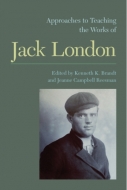
Approaches to Teaching the Works of Jack London
A prolific and enduringly popular author—and an icon of American fiction—Jack London is a rewarding choice for inclusion in classrooms from middle school to graduate programs. London’s biography and the role played by celebrity have garnered considerable attention, but the breadth of his personal experiences and political views and the many historical and cultural contexts that shaped his work are key to gaining a nuanced view of London’s corpus of works, as this volume’s wide-ranging perspectives and examples attest.The first section of this volume, “Materials,” surveys the many resources available for teaching London, including editions of his works, sources for his photography, and audiovisual aids. In part 2, “Approaches,” contributors recommend practices for teaching London’s works through the lenses of socialism and class, race, gender, ecocriticism and animal studies, theories of evolution, legal theory, and regional history, both in frequently taught texts such as The Call of the Wild, “To Build a Fire,” and Martin Eden and in his lesser-known works.
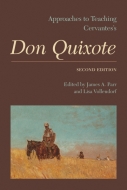
Approaches to Teaching Cervantes’s Don Quixote
This second edition of Approaches to Teaching Cervantes’s Don Quixote highlights dramatic changes in pedagogy and scholarship in the last thirty years: today, critics and teachers acknowledge that subject position, cultural identity, and political motivations afford multiple perspectives on the novel, and they examine both literary and sociohistorical contextualization with fresh eyes.
Part 1, “Materials,” contains information about editions of Don Quixote, a history and review of the English translations, and a survey of critical studies and Internet resources. In part 2, “Approaches,” essays cover such topics as the Moors of Spain in Cervantes’s time; using film and fine art to teach his novel; and how to incorporate psychoanalytic theory, satire, science and technology, gender, role-playing, and other topics and techniques in a range of twenty-first-century classroom settings.
