Approaches to Teaching World Literature
There are 173 products in Approaches to Teaching World Literature
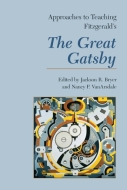
Approaches to Teaching Fitzgerald’s The Great Gatsby
“Who is this Gatsby anyhow?” Answering that question, voiced by one of the book’s characters, is fundamental to teaching F. Scott Fitzgerald’s The Great Gatsby. Although there is no simple answer, classroom analysis of this classic American novel can lead to a rich exploration of the colorful yet contradictory period Fitzgerald dubbed the Jazz Age. The novel also prompts considerations of novelistic technique, specifically point of view, characterization, and narrative structure.
This volume aims to give instructors of The Great Gatsby multiple tools and strategies for teaching the novel and for introducing students to the culture of the 1920s. Part 1, “Materials,” reviews the novel’s composition history and the scholarly resources related to the novel. In part 2, “Approaches,” contributors demonstrate a range of frameworks that usefully inform teaching, from the new historicism to feminist and gender studies to narrative theory. They also examine the novel’s complex artistry, variety of motifs and symbol patterns, and cultural and social influences, such as the era’s changing racial attitudes, the rise of a new suburban culture, and the dichotomy of East versus West in America.
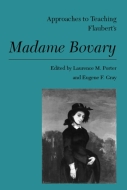
Approaches to Teaching Flaubert’s Madame Bovary
According to the editors of this collection of essays, Madame Bovary is “arguably the greatest novel of nineteenth-century France.” It “raises key issues in human relations, ethics, and social justice, as well as problems concerning the use and misuse of language, novelistic structure, tone, and figurative expression in literature.” Twenty Flaubert scholars show how they present this rich material to students in a variety of courses and settings, using methods that balance aesthetic (text-centered) and cultural (society-centered) studies.
The volume, like others in the MLA’s Approaches to Teaching World Literature series, is divided into two parts. The first part, “Materials,” reviews French and English editions of Madame Bovary and background materials useful to students and teachers. In the second part, “Approaches,” teachers examine the novel’s social milieu; offer course plans based on a variety of methodologies (including thematic, feminist, traditional humanistic, and deconstructionist approaches); and describe how to teach Madame Bovary in courses on film studies, world literature, and writing.
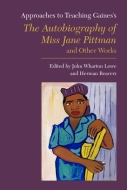
Approaches to Teaching Gaines’s The Autobiography of Miss Jane Pittman and Other Works
The Autobiography of Miss Jane Pittman tells the story of a woman, a community, and the African American experience from the Civil War through Jim Crow to the civil rights movement. This narrative and Gaines’s other novels and short stories explore the life of blacks in the South, their religious traditions and folkways, and their struggles under oppression. The southern communities described are diverse: blacks, creoles of color, poor whites, and wealthy landowners.
Part 1 of this volume provides biographical information about Ernest Gaines and a discussion of critical and background studies of his narrative. The essays in part 2 will help teachers of African American literature, American literature, and southern literature convey to their students various aspects of Gaines’s work and the adaptations of it in relation to southern literature, history, music, folk culture, and vernaculars of English.
Approaches to Teaching the Works of Inca Garcilaso de la Vega
The author of Comentarios reales and La Florida del Inca, now recognized as key foundational works of Latin American literature and historiography, Inca Garcilaso de la Vega was born in 1539 in Cuzco, the son of a Spanish conquistador and an Incan princess, and later moved to Spain. Recalling the family stories and myths he had heard from his Quechua-speaking relatives during his youth and gathering information from friends who had remained in Peru, he created works that have come to indelibly shape our understanding of Incan history and administration. He also articulated a new American identity, which he called mestizo.
This volume provides guidance on the translations of Garcilaso's writings and on the scholarly reception of his ideas. Instructors will discover ideas for teaching Garcilaso's works in relation to indigenous thought, European historiography, natural history, indigenous religion and Christianity, and Incan material culture. In essays informed by postcolonial and decolonial perspectives, scholars draw connections between Garcilaso's writings and contemporary issues like migration, multiculturalism, and indigenous rights.
Approaches to Teaching García Márquez’s One Hundred Years of Solitude
Critics have read One Hundred Years of Solitude as a cultural document, as a revolutionary narrative, and as a high point of early postmodernism. The novel is taught widely and in a variety of curricular contexts, from courses on civilization and Latin American literature to seminars on comparative literature and women’s studies. When treating the novel in North American classrooms, however, nearly all teachers must address similar issues—for example, Latin American history and magic realism. This volume in the Approaches to Teaching World Literature series suggests different methods for presenting these issues to undergraduates.
The volume is divided into two parts. The first part, “Materials,” discusses works about the novel and its author, the historical background, ideological contexts, and literary interpretations. The second part, “Approaches,” contains twelve essays on teaching One Hundred Years of Solitude. One group of essays shows how the novel is presented in various courses, such as humanities or politics. A second group of essays features approaches using history, ideology, myth, Jungian psychology, analytic psychology, hermeneutics, narratology, and other perspectives. The novel readily supports this range of interpretations because it is, as the editors say, “above all, a magnificent story that holds readers spellbound.”
Approaches to Teaching the Works of Amitav Ghosh
The prizewinning author of novels, nonfiction, and hybrid texts, Amitav Ghosh grew up in India and trained as an anthropologist. His works have been translated into over thirty languages. They cross and mix a number of genres, from science fiction to the historical novel, incorporating ethnohistory and travelogue and even recuperating dead languages. His subjects include climate change, postcolonial identities, translocation, migration, oceanic spaces, and the human interface with the environment.
Part 1 of this volume discusses editions of Ghosh’s works and the scholarship on Ghosh. The essays in part 2, “Approaches,” present ideas for teaching his works through considerations of postcolonial feminism, historicity in the novels, environmentalism, language, sociopolitical conflict, genre, intersectional reading, and the ethics of colonized subjecthood. Guidance for teaching Ghosh in different contexts, such as general education, world literature, or single-author classes, is provided.
Approaches to Teaching Gilman’s “The Yellow Wall-Paper” and Herland
Although the rediscovery in 1973 of the long-forgotten story “The Yellow Wall-Paper” (1892), by Charlotte Perkins Gilman, met an enthusiastic reception, no one expected the enormous impact it would have, resulting in dozens of articles and books, numerous dissertations, dramatizations on stage and in film, and inclusion in college literature anthologies. Not surprisingly, then, the story, often alongside Gilman’s second-most-famous work, Herland (1915), is widely taught in a variety of disciplines: literature, composition, feminist theory, women’s studies, psychology, history, sociology, religion—even geography. This volume in the MLA’s Approaches to Teaching series addresses the rewards and challenges of teaching these two works and offers a practical and valuable resource for teachers who are new to Gilman as well as for experienced teachers looking for fresh approaches.
Like other volumes in the series, this one is divided into two parts. The “Materials” section discusses editions and anthologies; surveys other writings by Gilman; suggests background and critical studies of interest to students and teachers; and identifies an array of supplemetary materials: film adaptations of “The Yellow Wall-Paper”; historical documents on birth control and the eugenics and Socialist movements; women’s magazines and handbooks published in Gilman’s time; and related literary works by other women writers such as Harriet Beecher Stowe. The “Approaches” section contains twenty-one essays that look at the works from a variety of perspectives, for students on different levels in a range of courses.
Approaches to Teaching Goethe’s Faust
“To know Goethe’s Faust is to know the humanities,” writes the editor of this book. But Faust may be difficult to present to undergraduates, not only because of the problems of translation, if the play is taught in English, but also because of the special uses of language, mythology, history, and science in Goethe’s sprawling cosmo-drama. This volume provides help and encouragement to the teacher of Faust; it contains suggestions by teachers of German literature, Romance literatures, English and American literatures, comparative literature, history, and psychology.
Like other volumes in the MLA’s Approaches to Teaching World Literature series, it is divided into two parts. The first, “Materials,” discusses the editions and translations available, aids to teaching, background works, and critical studies. In the second part, “Approaches,” twenty-four essays discuss topics ranging from the genre of Faust to the problem of Gretchen’s docility to poetic devices to the devil in literature. The essays are marked by a tension between those that advocate a strictly literary approach to Goethe’s work and those that take interdisciplinary and interart approaches.
Approaches to Teaching Gothic Fiction
Recent decades have seen a revival of scholarly interest in Gothic fiction. Critics are attracted to the genre’s exploration of irrationality, to its dark representation of the bourgeois family and of the psychological effects of social conflict. Because of this critical interest and because of the enduring popularity of the genre from the eighteenth century to the present, the Gothic has become increasingly visible on college syllabi.
This volume, like others in the MLA’s Approaches to Teaching World Literature series, is divided into two parts. The first part, “Materials,” gives information on available editions, anthologies, reference works, background sources, critical studies, films, and Web sites of value in teaching Gothic fiction. The second part, “Approaches,” contains twenty-eight essays that define the genre; examine its connections to history, philosophy, feminism, social criticism; show its different forms in England, Ireland, the United States; and probe its themes—including such motifs as ghosts, castles, entrapped heroines, and animated corpses.
Among the many authors discussed are Bram Stoker, Mary Shelley, Ann Radcliffe, Edgar Allan Poe, Nathaniel Hawthorne, Wilkie Collins, Oscar Wilde, Robert Louis Stevenson, Stephen King, Anne Rice, and Toni Morrison.
Approaches to Teaching the Poetry of John Gower
A poet who wrote fluently in Middle English, Anglo-French, and Latin, John Gower typifies the English Middle Ages. His economical and sober style, the topics he addressed—marriage, love, chivalry, social class, law, and religious faith—and the depth and breadth of his references to earlier literature, myth, and folktale made his work attractive not only to contemporaries such as Chaucer but also to later poets such as Spenser, Shakespeare, and Milton. Gower is increasingly acknowledged as a poet whose texts offer unique opportunities to teachers wishing to introduce their students to the riches of medieval literature and culture.
The essays in part 1, “Materials,” review the available editions and translations of Gower’s works, compile useful electronic resources for teaching, and discuss the sources and analogues and critical work on his canon. In part 2, “Approaches,” contributors make recommendations for teaching the historical context of Gower’s writing, involving topics from estates theory and law to confession and medicine; for examining his language and rhetoric in the classroom, including reading his work aloud; and for studying his works in various theoretical and comparative ways, with a special focus on his relation to classical as well as other Middle English authors. A final section considers the various classroom contexts in which Gower is taught, from community college to graduate school.
