Approaches to Teaching World Literature
There are 173 products in Approaches to Teaching World Literature
Approaches to Teaching the Thousand and One Nights
The Thousand and One Nights, composed in Arabic from the eighth to the fourteenth centuries, is one of the world's most widely circulated and influential collections of stories. To help instructors introduce the tales to students, this volume provides historical context and discusses the many transformations of the stories in a variety of cultures. Among the topics covered are the numerous translations and their impact on the tales' reception; various genres represented by the tales; gender, race, and slavery; and adaptations of the stories in films, graphic novels, and other media across the world and under conditions of both imperialism and postcolonialism. The essays serve instructors in subjects such as medieval literature, world literature, and Middle and Near Eastern studies and make a case for teaching the Thousand and One Nights in courses on identity and race.
Approaches to Teaching Tolkien’s The Lord of the Rings and Other Works
A philologist and medieval scholar, J. R. R. Tolkien never intended to write immensely popular literature that would challenge traditional ideas about the nature of great literature and that was worthy of study in colleges across the world. He set out only to write a good story, the kind of story he and his friends would enjoy reading. In The Hobbit and in The Lord of the Rings, Tolkien created an entire world informed by his vast knowledge of mythology, languages, and medieval literature. In the 1960s, his books unexpectedly gained cult status with a new generation of young, countercultural readers. Today, the readership for Tolkien’s absorbing secondary world—filled with monsters, magic, adventure, sacrifice, and heroism—continues to grow.
Part 1 of this volume, “Materials,” introduces instructors to the rich array of resources available for teaching Tolkien, including editions and criticism of his fiction and scholarship, historical material on his life and times, audiovisual materials, and film adaptations of his fiction. The essays in part 2, “Approaches,” help instructors introduce students to critical debates around Tolkien’s work, its sources, its influence, and its connection to ecology, religion, and science. Contributors draw on interdisciplinary approaches to outline strategies for teaching Tolkien in a wide variety of classroom contexts.
Approaches to Teaching Tolstoy’s Anna Karenina
Tolstoy’s Anna Karenina is probably the most often taught nineteenth-century Russian novel in the American academy. Teachers have found that including this virtuoso work of art on a syllabus reaps many rewards, especially in courses that connect texts thematically (e.g., Adultery in the Novel) or theoretically (e.g., Russian Literature into Film, Theory of Narrative). It also stirs up heated classroom discussion—on sex and sexuality, dysfunction in the family, gender roles, society’s hypocrisy and cruelty. But because of translation and transliteration problems, the peculiarity of Russian names and terms, the unfamiliarity of Russian geography and history, and the very size of the novel, teaching it presents challenges.
This volume, the seventy-eighth in the MLA’s Approaches to Teaching series, provides a comprehensive resource for dealing with these difficulties. The introduction contains a section on the complicated issue of names in Anna Karenina and another on the setting: time and space in the novel, Moscow versus Petersburg, the Russian country estate, travel, the railroad. Part 1, “Materials,” discusses and evaluates English translations and Russian editions of Anna Karenina and recommends works in the critical literature. In part 2, “Approaches,” twenty-two seasoned instructors of the novel describe their classroom experiences and suggest ways of introducing students to this powerful work; topics include ideas in Anna Karenina, agrarian issues, Tolstoy’s antiphilosophical philosophy, Tolstoy versus Dostoevsky, Anna’s dreams, and the reader’s moral education.
Approaches to Teaching Vergil’s Aeneid
Vergil’s Aeneid has been the most continually read and discussed work by a Roman author in the history of Western literature. Yet it can be a challenging work to teach—Vergil is a complex, subtle poet; his culture and time are removed from us; and Latin is less studied in college than it was a generation ago.
Part 1 of this volume, “Materials,” critiques the main English translations, lists reference works and resources (including those on the Internet), and gives an overview of criticism. Part 2, “Approaches,” strikes a balance between traditional and new approaches to the text. Among the subjects of these essays are Augustan politics, Homeric parallels, key terms (pietas, furor), narrative techniques, uses of simile, images of women, the treatment of warfare, and comparisons of the Aeneid with such works as Dante’s Divine Comedy and Milton’s Paradise Lost.
Approaches to Teaching Voltaire’s Candide
“Candide is probably the most frequently taught work of French literature,” writes Renée Waldinger, yet “students are often misled by the apparent simplicity of the tale.” The challenge for the teacher, then, is to guide student reading in a way that reveals the richness of the text and the depth of its comic aspect. Responding to this challenge, twenty-four experienced teachers of Candide offer their reflections on the tale, examine its humor, provide crucial historical and philosophical background information, review varying interpretations, and discuss specific teaching strategies.
The volume, like others in the MLA’s Approaches to Teaching World Literature series, is divided into two parts. The first part, “Materials,” surveys essential references, including critical and biographical studies and works on historical and intellectual contexts, and evaluates French and English language editions of Candide. In the second part, “Approaches,” teachers describe how they present Voltaire’s classic work, offering practical ideas for a variety of disciplines and on different levels, from freshman writing courses to graduate seminars.
Approaches to Teaching Whitman’s Leaves of Grass
Called the great poet of America by the writer Max Eastman in 1943, Walt Whitman has in the past few decades secured a largely unchallenged place in the literary canon. Yet, as Donald D. Kummings notes in his preface to this collection of essays, Whitman “often suffers from the treatment accorded many another major author—that is, readers approach him dutifully, reverentially, as an exhibit in a wax museum rather than as a poet of living relevance. This volume attempts to suggest ways in which teachers may vitalize Whitman and his Leaves for present and future generations of students.”
Like other volumes in the MLA’s Approaches to Teaching World Literature series, this book is divided into two parts. The first part, “Materials,” evaluates the many editions of Leaves of Grass, recommends student reading, and surveys reference and critical works, background and pedagogical studies, and audiovisual aids. In the second part, “Approaches,” nineteen teachers explore subjects and issues central to Whitman studies, including biographical concerns, literary relations, philosophical perspectives, elements of language and style, narrative techniques, prosodic innovations, and interpretive strategies.
Approaches to Teaching Wiesel’s Night
Elie Wiesel is an internationally known author, human rights advocate, and lecturer. Night, his first book (1956 in Yiddish, 1958 in French, 1960 in English; a new English translation appeared in 2006), has become a classic memoir of a Jewish survivor of the Holocaust.
The seventeen essays of this volume in the MLA series Approaches to Teaching World Literature examine the historical, cultural, and literary contexts of Wiesel’s book as well as strategies for teaching it in the classroom. Part 1, “Materials,” provides resources on the Jewish ghettos and concentration camps of World War II, on the Jewish faith and religious practices, on the genre of victims’ diaries, on the critical reception of Night, on Wiesel’s other work, and on available audiovisual materials. Part 2, “Approaches,” addresses many subjects—among them, Wiesel’s narrative techniques, the representation of Auschwitz, the use of different languages, the comparison of Wiesel with Primo Levi, the problems of memory and bearing witness, the Christian response to the Holocaust, and the challenge of teaching a grim and painful text to students.
Approaches to Teaching the Works of Oscar Wilde
It is both a challenge and a pleasure to teach the works of Oscar Wilde, “the master of paradox,” in the words of this volume’s editor. Wilde wrote at a pivotal moment between the Victorian period and modernism, and his work is sometimes considered prescient of the postmodern age. He is now taught in a variety of university courses: in literature, theater, criticism, Irish studies, cultural studies, gender studies, and gay studies.
This volume, like others in the MLA series Approaches to Teaching World Litereature, is divided into two parts. The first, “Materials,” suggests editions, resources, and criticism, both in print and online, that may be useful for the teacher. The second part, “Approaches,” contains twenty-five essays that discuss Wilde’s stories, fairy tales, poetry, plays, essays, letters, and life—from the perspective of a wide range of disciplines.
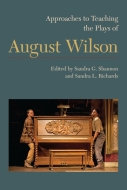
Approaches to Teaching the Plays of August Wilson
The award-winning playwright August Wilson used drama as a medium to write a history of twentieth-century America through the perspectives of its black citizenry. In the plays of his Pittsburgh Cycle, including the Pulitzer Prize–winning Fences and The Piano Lesson, Wilson mixes African spirituality with the realism of the American theater and puts African American storytelling and performance practices in dialogue with canonical writers like Aristotle and Shakespeare. Wilson’s plays, as they portray black Americans living through migration, industrialization, and war, explore the relation between a unified black consciousness and America’s collective identity.
In part 1 of this volume, “Materials,” the editors survey sources on Wilson’s biography, teachable texts of his plays, useful secondary readings, and compelling audiovisual and Web resources. The essays in part 2, “Approaches,” look at a diverse set of issues in Wilson’s work, including the importance of blues and jazz, intertextual connections to other playwrights, race in performance, Yoruban spirituality, and the role of women in the plays.
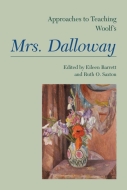
Approaches to Teaching Woolf’s Mrs. Dalloway
Mrs. Dalloway is considered a central work in Virginia Woolf’s oeuvre and in the modernist canon. It not only addresses historical and cultural issues such as war, colonialism, class, politics, marriage, sexuality, and psychology but also reimagines the novel form. Moreover, Mrs. Dalloway continues to grow in its influence and visibility, inspiring adaptations in film, theater, print, and other media.
Despite Mrs. Dalloway’s continued popularity, many students today find the prose daunting and a barrier to their appreciation and comprehension of the novel. This volume seeks to give instructors a variety of strategies for making Woolf’s work compelling and accessible to students while addressing the diverse ways it has been interpreted. Part 1, “Materials,” reviews editions of Mrs. Dalloway as well as critical and historical resources related to the novel. Part 2, “Approaches,” explores the task of contextualizing this key modernist text in the classroom. Some contributors situate Mrs. Dalloway in its historical time and place, namely, London in the period between the two world wars. Others discuss the novel’s narrative form or interpret it using perspectives from cultural studies, feminism, or queer theory. Still others address the novel’s relation to poems, films, and Victorian novels. Finally, a group of essays discusses the challenges and rewards of teaching the novel in settings both traditional and nontraditional, from a college classroom to a prison.
