Approaches to Teaching World Literature
There are 173 products in Approaches to Teaching World Literature
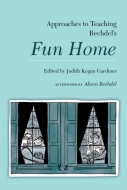
Approaches to Teaching Bechdel’s Fun Home
Alison Bechdel’s Fun Home: A Family Tragicomic has quickly joined the ranks of celebrated literary graphic novels. Set in part at a family-run funeral home, the book explores Alison’s complicated relationship with her father, a closeted gay man. Amid the tensions of her home life, Alison discovers her own lesbian sexuality and her talent for drawing. The coming-of-age story and graphic format appeal to students. However, the book’s nonlinear structure, frank representations of sexuality and death, and intertextuality with modernist novels, Greek myths, and other works present challenges in the classroom.
This volume offers strategies for teaching Fun Home in a variety of courses, including literature, women’s and gender studies, art, and education. Part 1, “Materials,” outlines the text’s literary, historical, and theoretical allusions. The essays of part 2, “Approaches,” emphasize the work’s genres, including autobiography and graphic narrative, as well as its psychological dimensions, including trauma, disability, and queer identity. The essays give options for reading Fun Home along with Bechdel’s letters and drafts; her long-running comic strip, Dykes to Watch Out For; the Broadway musical adaptation of the book; and other stories of LGBQT lives.
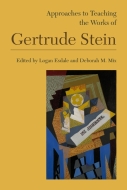
Approaches to Teaching the Works of Gertrude Stein
A trailblazing modernist, Gertrude Stein studied psychology at Radcliffe with William James and went on to train as a medical doctor before coming out as a lesbian and moving to Paris, where she collected contemporary art and wrote poetry, novels, and libretti. Known as a writer’s writer, she has influenced every generation of American writers since her death in 1946 and remains avant-garde.
Part 1 of this volume, “Materials,” provides information and resources that will help teachers and students begin and pursue their study of Stein. The essays of part 2, “Approaches,” introduce major topics to be covered in the classroom—race, gender, feminism, sexuality, narrative form, identity, and Stein’s experimentation with genre—in a wide range of contexts, including literary analysis, art history, first-year composition, and cultural studies.
Approaches to Teaching the Works of Ralph Waldo Emerson
A leader of the transcendentalist movement and one of the country’s first public intellectuals, Ralph Waldo Emerson has been a long-standing presence in American literature courses. Today he is remembered for his essays, but in the nineteenth century he was also known as a poet and orator who engaged with issues such as religion, nature, education, and abolition.
This volume presents strategies for placing Emerson in the context of his time, for illuminating his rhetorical techniques, and for tracing his influence into the present day and around the world. Part 1, “Materials,” offers guidance for selecting classroom editions and information on Emerson’s life, contexts, and reception. Part 2, “Approaches,” provides suggestions for teaching Emerson’s works in a variety of courses, not only literature but also creative writing, religion, digital humanities, media studies, and environmental studies. The essays in this section address Emerson’s most frequently anthologized works, such as Nature and “Self-Reliance,” along with other texts including sermons, lectures, journals, and poems.
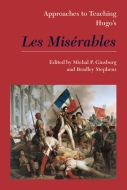
Approaches to Teaching Hugo’s Les Misérables
The greatest work of one of France’s greatest writers, Victor Hugo’s Les Misérables has captivated readers for a century and a half with its memorable characters, its indictment of injustice, its concern for those suffering in misery, and its unapologetic embrace of revolutionary ideals. The novel’s length, multiple narratives, and encyclopedic digressiveness make it a pleasure to read but a challenge to teach, and this volume is designed to address the needs of instructors in a variety of courses that include the novel in excerpts or as a whole.
Part 1 of the volume, “Materials,” provides guidance on editions in French and in English translation, biographies, criticism, and maps. Part 2, “Approaches,” contains essays that discuss the novel’s conceptions of misère, sexuality, and the politics of the time and that demonstrate techniques for teaching context including the book’s literary market, its adaptations, its place in popular culture, and its relation to other novels of its time.
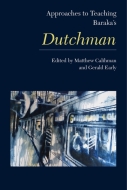
Approaches to Teaching Baraka’s Dutchman
First performed in 1964, Amiri Baraka’s play about a charged encounter between a black man and a white woman still has the power to shock. The play, steeped in the racial issues of its time, continues to speak to racial violence and inequality today.
This volume offers strategies for guiding students through this short but challenging text. Part 1, “Materials,” provides resources for biographical information, critical and literary backgrounds, and the play’s early production history. The essays of part 2, “Approaches,” address viewing and staging Dutchman theatrically in class. They help instructors ground the play artistically in the black arts movement, the beat generation, the theater of the absurd, pop music, and the blues. Background on civil rights, black power movements, the history of slavery, and Jim Crow laws helps contextualize the play politically and historically.
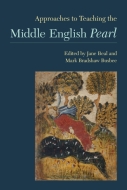
Approaches to Teaching the Middle English Pearl
The moving, richly allegorical poem Pearl was likely written by the anonymous poet who also penned Sir Gawain and the Green Knight. In it, a man in a garden, grieving the loss of a beloved pearl, dreams of the Pearl-Maiden, who appears across a stream. She teaches him the nature of innocence, God’s grace, meekness, and purity. Though granted a vision of the New Jerusalem by the Pearl-Maiden, the dreamer is pained to discover that he cannot cross the stream himself and join her in bliss—at least not yet. This extraordinary poem is a door into late medieval poetics and Catholic piety.
Part 1 of this volume, “Materials,” introduces instructors to the many resources available for teaching the canonical yet challenging Pearl, including editions, translations, and scholarship on the poem as well as its historical context. The essays in part 2, “Approaches,” offer instructors tools for introducing students to critical issues associated with the poem, such as its authorship, sources and analogues, structure and language, and relation to other works of its time. Contributors draw on interdisciplinary approaches to outline ways of teaching Pearl in a variety of classroom contexts.
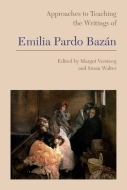
Approaches to Teaching the Writings of Emilia Pardo Bazán
“Emilia Pardo Bazán (1851–1921) was the most prolific and influential woman writer of late nineteenth-century Spain,” write the editors of this volume in the MLA’s Approaches to Teaching World Literature series. Her writings—novels, novellas, short stories, essays, plays, travel writing, and cookbooks—cover topics from fashion to science and technology to gender equality. In a literary style characterized by brilliance, they contend with the critical issues of her time and are compelling to teach today.
Part 1, “Materials,” provides biographical and critical resources, an overview of Pardo Bazán’s vast oeuvre, and a literary-historical time line. It also reviews secondary sources, editions and translations, and digital resources. The essays in part 2, “Approaches,” explore Pardo Bazán’s engagement with contemporary literary movements, feminism and gender, nation and the late Spanish empire, Spanish and Galician identities, and nineteenth-century scientific and medical discourses. Film adaptations and translations of Pardo Bazán’s works are also addressed. Instructors of courses on world literature, nineteenth-century literature, gender studies, and Spanish-language courses will find the volume invaluable.
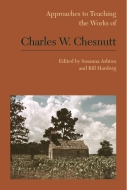
Approaches to Teaching the Works of Charles W. Chesnutt
Growing up in Cleveland after the Civil War and during the brutal rollback of Reconstruction and the onset of Jim Crow, Charles W. Chesnutt could have passed as white but chose to identify himself as black. An intellectual and activist involved with the NAACP who engaged in debate with Booker T. Washington and W. E. B. Du Bois, he wrote fiction and essays that addressed issues as various as segregation, class among both blacks and whites, Southern nostalgia, and the Wilmington coup d’état of 1898. The portrayals of race, racial violence, and stereotyping in Chesnutt’s works challenge teachers and students to contend with literature as both a social and an ethical practice.
In part 1 of this volume, “Materials,” the editors survey the critical reception of Chesnutt’s works in his lifetime and after, along with the biographical, critical, and archival texts available to teachers and students. The essays in part 2, “Approaches,” address such topics in teaching Chesnutt as his use of dialect, the role of intertextuality and genre in his writing, irony, and his treatment of race, economics, and social justice.
Winner of the Sylvia Lyons Render Award from the Charles W. Chesnutt Association
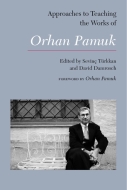
Approaches to Teaching the Works of Orhan Pamuk
Winner of the Nobel Prize in Literature in 2006, Orhan Pamuk is Turkey’s preeminent novelist and an internationally recognized figure of letters. Influenced by both Turkish and European literature, his works interrogate problems of modernity and of East and West in the Turkish context and incorporate the Ottoman legacy linguistically and thematically. The stylistic and thematic aspects of his novels, his intriguing use of intertextual elements, and his characters’ metatextual commentaries make his work rewarding in courses on world literature and on the postmodern novel. Pamuk’s nonfiction writings extend his themes of memory, loss, personal and political histories, and the craft of the novel.
Part 1, “Materials,” provides biographical background and introduces instructors to translations and critical scholarship that will elucidate Pamuk’s works. In part 2, “Approaches,” essays cover topics that support teachers in a range of classrooms, including Pamuk’s use of the Turkish language, the political background to Pamuk’s novels, the politics of translation and aesthetics, and Pamuk’s works as world literature.
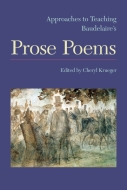
Approaches to Teaching Baudelaire’s Prose Poems
A prolific poet, art critic, essayist, and translator, Charles Baudelaire is best known for his volumes of verse (Les Fleurs du Mal [Flowers of Evil]) and prose poems (Le Spleen de Paris [Paris Spleen]). This volume explores his prose poems, which depict Paris during the Second Empire and offer compelling and fraught representations of urban expansion, social change, and modernity.
Part 1, “Materials,” surveys the valuable resources available for teaching Baudelaire, including editions and translations of his oeuvre, historical accounts of his life and writings, scholarly works, and online databases. In Part 2, “Approaches,” experienced instructors present strategies for teaching critical debates on Baudelaire’s prose poems, addressing topics such as translation theory, literary genre, alterity, poetics, narrative theory, and ethics as well as the shifting social, economic, and political terrain of the nineteenth century in France and beyond. The essays offer interdisciplinary connections and outline traditional and fresh approaches for teaching Baudelaire’s prose poems in a wide range of classroom contexts.
