Approaches to Teaching World Literature
There are 173 products in Approaches to Teaching World Literature
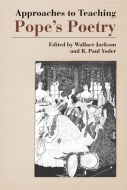
Approaches to Teaching Pope’s Poetry
Pope’s poetry, the editors of this collection suggest, “provides . . . an index to social criticism, to enlightened religious belief, to witty and vivacious writing, and to the bearing of much of the Western literary tradition on the eighteenth-century mind.” Approaches to Teaching Pope’s Poetry strives to make Pope’s genius and versatility shine in the classroom.
Like other books in the MLA’s Approaches to Teaching World Literature series, this one is divided into two parts. The first part, “Materials,” features a survey of useful reference materials as well as recommendations on available editions and anthologies. The essays in the second part, “Approaches,” discuss Pope’s wit and use of satire, his debt to Horace, and his relationship with the Scriblerians; present Pope’s poetry alongside verse and parodies by his contemporaries; and share strategies for teaching individual poems in a variety of courses. Several essays discuss Pope’s influence on the English Romantics, especially Byron and Wordsworth.
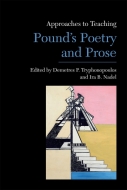
Approaches to Teaching Pound’s Poetry and Prose
Known for his maxim “Make it new,” Ezra Pound played a principal role in shaping the modernist movement as a poet, translator, and literary critic. His works, with their complex structures and layered allusions, remain widely taught. Yet his known fascism, anti-Semitism, and misogyny raise issues about dangerous ideologies that influenced his work and that must be addressed in the classroom.
The first section, “Materials,” catalogs the print and digital editions of Pound’s works, evaluates numerous secondary sources, and provides a history of Pound’s critical contexts. The essays in the second section, “Approaches,” offer strategies for guiding students toward a clearer understanding of Pound’s difficult works and the context in which they were written.
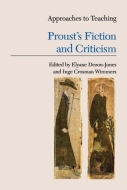
Approaches to Teaching Proust’s Fiction and Criticism
Since the first volume of Proust’s A la recherche du temps perdu was published, in 1913, the work has challenged readers and critics by stretching the genre of the novel: storytelling is paired with essay discourse, fiction blends into autobiography, and the text follows the course of memory instead of chronology. The essays collected in this volume show how the Recherche grew out of Proust’s literary criticism to forge a novel that explores the aesthetic, social, philosophical, and sexual concerns of Proust’s time in bold, new ways.
The first section, “Materials,” demystifies the complex publication history of Proust’s works. The editors review an array of resources—from biographies, collections of essays, noted journals, and reference books to audiovisual materials, electronic resources, and dramatizations of Proust’s writing. In their review of online resources available for classroom use, the editors pay special attention to the Institut des Textes et Manuscrits Modernes, Bibliothèque Nationale de France, and Kolb-Proust Archive for Research.
The Recherche, at once canonical and subversive, has elicited a varied critical response, which the essays in the second section, “Approaches,” reflect. The first group illuminates the historical background of Proust’s artistic milieu and the role of the Dreyfus affair and the First World War in Proust’s development as a novelist. The next set interprets the function of names, memory, reading, and homosexuality in the Recherche and other works and discusses film versions of the novel. The final essays provide instructors concrete methods for teaching Proust in diverse teaching environments and at different levels of instruction.
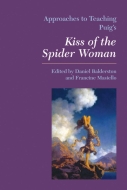
Approaches to Teaching Puig’s Kiss of the Spider Woman
Manuel Puig’s 1976 Kiss of the Spider Woman, translated into English in 1979 and adapted as an Academy Award-winning film, expanded the idiom of the novel (mixing cinema, fiction, romance, and song) and challenged the third-person narration that was dominant in Latin American Boom fiction. Students are drawn to the conversational style of the novel and the melodramatic seductions of the tale, but they need guidance to appreciate the novel’s richness as a work of literature. This volume of the MLA’s Approaches to Teaching series suggests ways instructors can help students grasp the novel’s exploration of state and sexual politics and discern the strategies of narration that underlie the conversations between the two main characters.
In part 1, “Materials,” the editors discuss versions and translations of the novel, provide readings and resources, give an overview of the historical and political background of 1970s Argentina, and outline the author’s biography. The thirteen essays in part 2, “Approaches,” written by distinguished scholars of Latin American literature, offer close textual analysis, examine the author’s use of cinematic references, and present suggestions for teaching Héctor Babenco’s film adaptation alongside the written text.
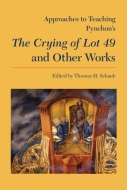
Approaches to Teaching Pynchon’s The Crying of Lot 49 and Other Works
As teachers well know, the elements that make Thomas Pynchon exciting to read and study—the historical references, the multilayered prose, and the postmodern integration of high and low cultures and science and literature—often constitute hurdles to undergraduate and graduate readers alike. The essays gathered in this volume turn these classroom challenges into assets, showing instructors how to make the narratives’ frustration of reader expectations not only intellectually rewarding but also part of the joy of reading The Crying of Lot 49, Gravity’s Rainbow, Mason & Dixon, and other Pynchon works, short and long.
Like all volumes in the Approaches to Teaching series, the collection opens with a survey of original and supplementary materials. The essays that follow offer an array of classroom techniques: among them, ways to contextualize the novels in their historical settings, from Puritan America through World War II and the volatile 1960s; to use the texts to explore racial and gender politics and legacies of colonialism; and to make Pynchon’s elaborate prose style accessible to students. Teachers will also find sample syllabi for courses solely on Pynchon as well as suggestions for incorporating his work into graduate and undergraduate classrooms at a range of institutions.
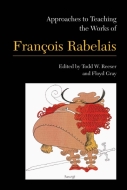
Approaches to Teaching the Works of François Rabelais
The works of François Rabelais—Gargantua, Pantagruel, the Tiers livre, and the Quart livre—embody the Renaissance spirit of discovery and are crucial to the development of early modern prose and to the birth of the novel. Rabelais’s exuberant satire deals not only with the major cultural and intellectual issues of his time but also with issues of interest to students today.
This volume, in the MLA series Approaches to Teaching World Literature, suggests the materials that can be used in teaching Rabelais: editions, translations, criticism, Web sites, music, artwork, and films. Thirty-four essays present strategies for the classroom, discussing the classical and biblical allusions; the context of humanism and evangelical reform; various themes (giants, monsters, war); both feminism and masculinity as vexing subjects; Rabelais’s erudition; and the challenges of teaching his inventive language, his ambiguity, and his scatology.
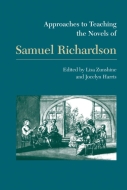
Approaches to Teaching the Novels of Samuel Richardson
The novels of Samuel Richardson can be demanding for the student today because of their focus on virtue, their embodiment of eighteenth-century social conventions, and their sheer length. Although the critical scholarship on Richardson is thriving, there is little work on teaching his novels. This volume turns the challenges of his novels into opportunities for inventive pedagogy.
Part 1, “Materials,” assesses available editions of Richardson’s works; evaluates background materials; and reviews biographies, critical studies, readings on eighteenth-century literature, and Web resources. A survey of experienced instructors identifies successful assignments for both undergraduate and graduate students.
Part 2, “Approaches,” is divided into four sections, one on the background of Richardson’s novels and one each on Clarissa, Pamela, and Sir Charles Grandison. Contributors explore the meaning of religion to Richardson’s characters and to his contemporaries; discuss how his work as a printer influenced the physical appearance of his novels; show how to engage students in the debates about feminism and patriarchal ideology in the novels; and consider why Richardson revised so extensively. Classroom exercises use the Web to compare online editions of Richardson’s novels.
Approaches to Teaching the Romance of the Rose
One of the most influential texts of its time, the Romance of the Rose offers readers a window into the world view of the late Middle Ages in Europe, including notions of moral philosophy and courtly love. Yet the Rose also explores topics that remain relevant to readers today, such as gender, desire, and the power of speech. Students, however, can find the work challenging because of its dual authorship by Guillaume de Lorris and Jean de Meun, its structure as an allegorical dream vision, and its encyclopedic length and scope.
The essays in this volume offer strategies for teaching the poem with confidence and enjoyment. Part 1, "Materials," suggests helpful background resources. Part 2, "Approaches," presents contexts, critical approaches, and strategies for teaching the work and its classical and medieval sources, illustrations, and adaptations as well as the intellectual debates that surrounded it.
Approaches to Teaching Rousseau’s Confessions and Reveries of the Solitary Walker
Rousseau is read, literally, all over the world. Given the enormous place autobiographical writing has come to occupy in literary studies, his influence is not surprising. The Confessions, in which Rousseau relates most of the events of his life, and The Reveries of the Solitary Walker, which focuses on his last few years, are his primary contributions to this form, which he essentially reinvented in modern Western literature. Together, the two writings give voice to some of the major political, psychological, literary, ethical, and environmental concerns of our day. This breadth is reflected in the wide spectrum of courses in which Rousseau’s works are taught—courses on great books, world literature, political science, autobiography, travel, and women’s studies, as well as courses at all levels of French studies.
Like other volumes in the MLA’s Approaches to Teaching series, this book is divided into two parts. Part 1, “Materials,” reviews the place of the Confessions and Reveries in Rousseau’s oeuvre, assesses editions in French and translations into English, provides guidance to important background readings and critical studies, and lists an array of audiovisual resources and Web sites devoted to Rousseau. In part 2, “Approaches,” contributors discuss the sources of Rousseau’s confessional writings, explore the new literary mode of autobiography, and consider the problems of the public responses to his work. They also scrutinize particular passages and investigate contemporary critical approaches as well as comparative approaches linking Rousseau to other writers, including Wordsworth and Baudelaire. Rounding out the volume are two useful compendiums—a chronology of Rousseau’s life and an annotated list of his other major works.
Approaches to Teaching Sand’s Indiana
Indiana, George Sand’s first solo novel, opens with the eponymous heroine brooding and bored in her husband’s French countryside estate, far from her native Île Bourbon (now Réunion). Written in 1832, the novel appeared during a period of French history marked by revolution and regime change, civil unrest and labor concerns, and slave revolts and the abolitionist movement, when women faced rigid social constraints and had limited rights within the institution of marriage. With this politically charged history serving as a backdrop for the novel, Sand brings together Romanticism, realism, and the idealism that would characterize her work, presenting what was deemed by her contemporaries a faithful and candid representation of nineteenth-century France.
This volume gathers pedagogical essays that will enhance the teaching of Indiana and contribute to students’ understanding and appreciation of the novel. The first part gives an overview of editions and translations of the novel and recommends useful background readings. Contributors to the second part present various approaches to the novel, focusing on four themes: modes of literary narration, gender and feminism, slavery and colonialism, and historical and political upheaval. Each essay offers a fresh perspective on Indiana, suited not only to courses on French Romanticism and realism but also to interdisciplinary discussions of French colonial history or law.
