Approaches to Teaching World Literature
There are 173 products in Approaches to Teaching World Literature
Approaches to Teaching Shorter Elizabethan Poetry
Teaching Elizabethan poems, Patrick Cheney and Anne Lake Prescott tell us in their preface to this book, “can provide pleasure and insight, but it can also be a challenge: modern students, and even modern teachers, sometimes find shorter Elizabethan poems aesthetically or emotionally engaging but culturally remote and intellectually difficult.” This collection of essays presents materials and strategies for helping students and teachers share in the enjoyment of Elizabethan poetry, including verse by authors such as Thomas Campion, John Donne, Michael Drayton, Elizabeth I, George Gascoigne, Ben Jonson, Christopher Marlowe, Walter Ralegh, Mary Sidney, Philip Sidney, William Shakespeare, John Skelton, Edmund Spenser, the earl of Surrey, Mary Wroth, and Thomas Wyatt.
Like other books in the Approaches to Teaching World Literature series, this volume is divided into two parts. Part 1, “Materials,” suggests texts and anthologies for use in the classroom and identifies important background resources and critical studies for the instructor. From this profusion of information, the coeditor, Patrick Cheney, recommends a convenient list of items for the instructor in a hurry. Part 2, “Approaches,” contains thirty-seven essays on teaching individual poems and authors or a selection of poems, as well as developing an entire course using a coherent critical narrative.
Approaches to Teaching Sir Gawain and the Green Knight
One of the most widely taught medieval English poems, Sir Gawain and the Green Knight still provides many challenges for teachers. What is the best way to explain to students its alliteration and unusual stanzaic form? Why does the poet begin with the fall of Troy? On what Arthurian tradition is the author drawing? Would the lady’s behavior have been conventional in the Middle Ages? Why does Arthur’s court laugh in the end—is the poem a comedy? In this volume, twenty-four teachers offer strategies for successfully presenting the perplexities of Sir Gawain in a variety of courses.
Like other books in the Approaches to Teaching World Literature series, Approaches to Teaching Sir Gawain and the Green Knight is divided into two parts. Part 1, “Materials,” surveys materials useful to classroom instruction, such as translations, anthologies, reference works, and teaching aids. Part 2, “Approaches,” begins with background essays on teaching the poem within the traditions of romance, chivalry, courtly love, religion and law, and medieval aesthetics. The essays that follow discuss ways to include the poem, both in translation and in the original, in courses ranging from freshman composition to graduate seminars. A final section includes ideas that can be adapted to any class—from reading the poem aloud to sponsoring a medieval banquet.
Approaches to Teaching the Song of Roland
Each book contains a CD featuring performances of the Song of Roland.
The Song of Roland is a well-known hallmark of medieval French literature, yet students often read only excerpts and receive general introductions to the poem and its context. The challenges of teaching Roland include its age and subject matter, its form and composition in Old French, and its representation of Christians and Muslims. This volume in the MLA series Approaches to Teaching World Literature aims to help nonspecialist instructors teach Roland more comprehensively and to offer seasoned medievalists ways to invigorate their pedagogical tactics. Part 1, “Materials,” surveys available editions, a wide range of secondary studies devoted to the poem, and electronic aids to teaching. Essays in part 2, “Approaches,” elaborate on the poem’s contexts, avatars, language techniques, and characters and episodes; describe the diverse classroom strategies that experienced instructors have implemented; and review the voluminous critical canon about the poem.
The musical quality of the Song of Roland is vital for students to grasp. A compact disc accompanying the volume showcases reconstructions of sung performances of the Song of Roland in Old French. The examples offered here illuminate the rich quality of Roland’s archaic language and demonstrate a few efforts to recover its lost music. Paired with performances of Roland are melodies used as models for singing the poem.
Approaches to Teaching Spenser’s Faerie Queene
“The Faerie Queene,“ according to Alexander Dunlop (coeditor of the present volume), “may be the most undervalued classic in the canon of English poetry.” The epic poem’s archaic language, formal structure, historical references, and literary allusions all present special challenges to both student and teacher—challenges that the contributors to this book believe can be overcome with creativity and wit. Designed for beginning instructors as well as for specialists still looking for the lesson plan of their dreams, Approaches to Teaching Spenser’s Faerie Queene offers a thorough discussion of recent work on Spenser and on the social and cultural milieu of Elizabethan England.
This Approaches volume, like others in the series, is divided into two parts. Part 1, “Materials,” surveys resources useful for classroom instruction (such as editions, anthologies, and student readings), reviews background studies and critical scholarship, and reprints eight illustrations related to the poem. Part 2, “Approaches,” presents six essays suggesting methods for introducing The Faerie Queene to students and nine essays describing advanced classroom strategies incorporating a variety of topics, including the visual arts, feminism, and colonialism.
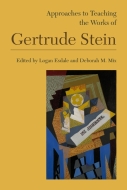
Approaches to Teaching the Works of Gertrude Stein
A trailblazing modernist, Gertrude Stein studied psychology at Radcliffe with William James and went on to train as a medical doctor before coming out as a lesbian and moving to Paris, where she collected contemporary art and wrote poetry, novels, and libretti. Known as a writer’s writer, she has influenced every generation of American writers since her death in 1946 and remains avant-garde.
Part 1 of this volume, “Materials,” provides information and resources that will help teachers and students begin and pursue their study of Stein. The essays of part 2, “Approaches,” introduce major topics to be covered in the classroom—race, gender, feminism, sexuality, narrative form, identity, and Stein’s experimentation with genre—in a wide range of contexts, including literary analysis, art history, first-year composition, and cultural studies.
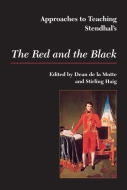
Approaches to Teaching Stendhal’s The Red and the Black
“A novel is a mirror moving along a highway,” writes Stendhal in The Red and the Black, his chronicle of French Restoration politics, class, and society on the eve of the July Revolution of 1830. “One minute you see it reflect the azure skies, next minute the mud and puddles on the road.” Stendhal’s defense of his work and the widely taught novel in which it appears set forth two problematic topics for students: literary realism (and its limitations) and the presentation of history in literature. The editors of this volume focus on how best to address these questions in courses on French literature, world literature, European intellectual history, comparative literature, and more.
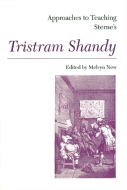
Approaches to Teaching Sterne’s Tristram Shandy
Laurence Sterne never would have imagined, according to the volume editor Melvyn New, “that The Life and Opinions of Tristram Shandy would two hundred years later be read in classrooms and endorsed by professorial types.” Yet this formidable and great novel is indeed “swimming down the gutter of time,” as Sterne prayed it would. The nineteen essays here, written by experienced “professorial types” who teach at a variety of levels, prove that Sterne is an author whose comic wit must be taken seriously and whose novel students can learn to appreciate and enjoy.
This volume, like others in the MLA’s Approaches to Teaching World Literature series, is divided into two parts. The first part, “Materials,” reviews editions of Tristram Shandy, other primary works, biographical resources, background studies, and critical commentary. In the second part, “Approaches,” teachers—including both nonspecialists and well-known Sterne scholars—suggest strategies for presenting the novel in courses ranging from English literature surveys (where Tristram Shandy might be taught) to seminars on the eighteenth-century novel (where Sterne’s work must be taught).
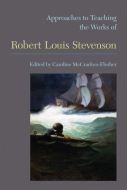
Approaches to Teaching the Works of Robert Louis Stevenson
Although Robert Louis Stevenson was a late Victorian, his work—especially Treasure Island and The Strange Case of Dr. Jekyll and Mr. Hyde—still circulates energetically and internationally among popular and academic audiences and among young and old. Admired by Henry James, Vladimir Nabokov,
and Jorge Luis Borges, Stevenson’s fiction crosses the boundaries of genre and challenges narrow definitions of the modern and the postmodern.
Part 1 of this volume, “Materials,” provides an introduction to the writer’s life, a survey of the criticism of his work, and a variety of resources for the instructor. In part 2, “Approaches,” thirty essays address such topics as Stevenson’s dialogue with James about literature; his verse for children; his Scottish heritage; his wanderlust; his work as gothic fiction, as science fiction, as detective fiction; his critique of imperialism in the South Seas; his usefulness in the creative writing classroom; and how Stevenson encourages expansive thinking across texts, times, places, and lives.
Approaches to Teaching Stowe’s Uncle Tom’s Cabin
Although rarely found on college syllabi just two decades ago, Uncle Tom’s Cabin is (according to an MLA survey) one of the most frequently named additions to nineteenth-century American literature courses. The inclusion of this political, sentimental, and incredibly popular novel introduces a host of issues to the classroom: the novel’s place in the canon of women’s literature, the historical importance of its commercial success, the status of Stowe’s work as “good” literature, and—perhaps the greatest challenge to teachers—the topic of race.
This volume, like others in the MLA series Approaches to Teaching World Literature, is divided into two parts. The first part, “Materials,” reviews available editions of Uncle Tom’s Cabin, biographical works, historical materials, works of criticism, and audiovisual resources. The seventeen essays in the second part, “Approaches,” suggest teaching strategies that spotlight the novel’s literary and historical context, recent debate and controversy, and current theoretical and critical methodologies. Because the issue of race tends to dominate any attempt to teach or discuss the novel, a number of essays address the racism that pervades Stowe’s best-known work.
Approaches to Teaching Swift’s Gulliver’s Travels
Jonathan Swift’s Travels into Several Remote Nations of the World—more commonly known as Gulliver’s Travels—is rightly considered one of literature’s great satires. Many students, however, regard the book as children’s literature and Swift himself as a misanthrope. Teachers face the additional challenge that inexperienced readers will be overwhelmed by the book’s unfamiliar political and historical landscape. The essays in this volume of the Approaches to Teaching World Literature series help instructors deal with the enormous amount of background material incorporated into Gulliver’s Travels, the book’s seeming lack of structural and thematic unity, the author’s often ambivalent attitude toward his “hero” and the peoples and creatures Gulliver encounters during his voyages, and the essence of Swift’s satire.
The first of the two parts of this volume, “Materials,” reviews classroom editions of Gulliver’s Travels, required and recommended student readings, audiovisual materials, and background and biographical works for instructors. The second part, “Approaches,” offers strategies, by twenty teachers, for presenting Swift’s work in a variety of settings. Fourteen essays suggest different methodologies for introducing the text to students—such as considering whether Gulliver’s Travels is a novel and using Swift’s letters to reveal the “real” author. The final six essays propose specific assignments for students, from performing dramatic readings to writing satires.
