Approaches to Teaching World Literature
There are 173 products in Approaches to Teaching World Literature
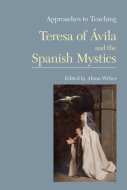
Approaches to Teaching Teresa of Ávila and the Spanish Mystics
The writings of Teresa of Ávila and the Spanish mystics, most notably John of the Cross and Luis de León, aroused passionate responses when they were composed. Though today’s students realize that religious beliefs have wide-ranging consequences, they are presented with particular challenges in studying the Spanish mystics because of their unfamiliarity with the linguistic, social, and religious history of early modern Spain. This volume is designed to help instructors elicit students’ curiosity, sympathy, and appreciation for writings that can at first seem alien or confusing.
Part 1, “Materials,” recommends accessible editions and translations; print, electronic, and visual resources; background and critical studies; and sources on the philosophical and theological responses to the Spanish mystics. Part 2, “Approaches,” presents methods for teaching the historical contexts of and various theoretical perspectives on the mystics’ works. Contributors consider these authors in relation to Islamic and Jewish mysticism, the traditions of women’s writing, feminism, theology, and autobiography. They also recommend ways to teach particular texts in different kinds of courses and institutions.
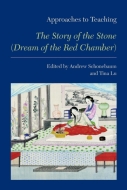
Approaches to Teaching The Story of the Stone (Dream of the Red Chamber)
The Story of the Stone (or Dream of the Red Chamber), a Chinese novel by Cao Xueqin and continued by Gao E, tells of an amazing garden, of a young man’s choice between two beautiful women, of his journey toward enlightenment, and of the moral and financial decline of a powerful family. Published in 1792, it depicts virtually every facet of life in eighteenth-century China—and has influenced culture in China ever since.
Part 1 of this volume, “Materials,” provides information and resources that will help teachers and students begin and pursue their study of Stone. The essays that constitute part 2, “Approaches,” introduce major topics to be covered in the classroom: Chinese religion, medicine, history, traditions of poetry, material culture, sexual mores, servants, Stone in film and on television, and the formidable challenges of translation into English that were faced by David Hawkes and then by John Minford.
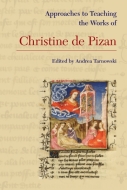
Approaches to Teaching the Works of Christine de Pizan
A prolific poet and a protofeminist, Christine de Pizan worked within a sophisticated late medieval court culture and formed an identity as an authority on her society’s preoccupations with religion, politics, and morality. Her works address various aspects of misogyny, the appropriate actions of rulers, and the ethical framework for social conduct. In addition to gaining a readership in fifteenth-century France, Christine’s works influenced writers in Tudor England and were identified by twentieth-century readers as important contributions both to the emergence of a professional literary class and to the intellectual climate that gave rise to early modern Europe.
Part 1 of this volume, “Materials,” surveys the editions in Middle French, translations into modern French and English, and the many scholarly resources and critical reactions of the past fifty years. Part 2, “Approaches,” provides insights into various aspects of Christine’s works that can be explored with students, from considerations of genre and form to the themes of virtue, history, and memory. Teachers of French, English, world literature, and women’s studies will find useful ideas throughout the volume.
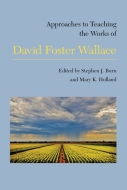
Approaches to Teaching the Works of David Foster Wallace
David Foster Wallace’s works engage with his literary moment—roughly summarized as postmodernism—and with the author’s historical context. From his famously complex fiction to essays critical of American culture, Wallace’s works have at their core essential human concerns such as self-understanding, connecting with others, ethical behavior, and finding meaning. The essays in this volume suggest ways to elucidate Wallace’s philosophical and literary preoccupations for today’s students, who continue to contend with urgent issues, both personal and political, through reading literature.
Part 1, “Materials,” offers guidance on biographical, contextual, and archival sources and critical responses to Wallace’s writing. The essays in part 2, “Approaches,” discuss teaching key works and genres in high school settings, first-year undergraduate writing classes, American literature surveys, seminars on Wallace, and world literature courses. They examine Wallace’s social and philosophical contexts and contributions, treating topics such as gender, literary ethics, and the culture of writing programs.
Approaches to Teaching the Works of Karen Tei Yamashita
Structurally innovative and culturally expansive, the works of Karen Tei Yamashita invite readers to rethink conventional paradigms of genres and national traditions. Her novels, plays, and other texts refashion forms like the immigrant tale, the postmodern novel, magical realism, apocalyptic literature, and the picaresque and suggest new transnational, hemispheric, and global frameworks for interpreting Asian American literature.
Addressing courses in American studies, contemporary fiction, environmental humanities, and literary theory, the essays in this volume are written by undergraduate and graduate instructors from across the United States and around the globe. Part 1, “Materials,” outlines Yamashita’s novels and other texts, key works of criticism and theory, and resources for Asian American and Asian Brazilian literature and culture. Part 2, “Approaches,” provides options for exploring Yamashita’s works through teaching historical debates, outlining principles of environmental justice, mapping geographic boundaries to highlight power dynamics, and drawing personal connections to the texts. Additionally, an essay by Yamashita describes her own approaches to teaching creative writing.
Approaches to Teaching the Works of Miguel de Unamuno
A central figure of Spanish culture and an author in many genres, Miguel de Unamuno (1864–1936) is less well known outside Spain. He was a surprising writer and thinker: a professor of Greek who embraced metafiction and modernist methods, a proponent of Castilian Spanish although born in the Basque Country and influenced by many international writers, and an early existentialist who was yet religious. He found himself in opposition to both King Alfonso XIII and the military dictatorship of Miguel Primo de Rivera and then became involved in the political upheaval that led to the Spanish Civil War.
Part 1 of this volume, “Materials,” gives information on different editions and translations of Unamuno’s works, on scholarly and critical secondary sources, and on Web resources. The essays in part 2, “Approaches,” offer suggestions for introducing students to the range of his works—novels, essays, poetry, and drama—in Spanish language and literature, comparative literature, religion, and philosophy classrooms.
Approaches to Teaching the Works of Ngũgĩ wa Thiong’o
Ngũgĩ wa Thiong’o is one of the most important and celebrated authors of postindependence Africa as well as a groundbreaking postcolonial theorist. His work, written first in English, then in Gĩkũyũ, engages with the transformations of his native Kenya after what is often termed the Mau Mau rebellion. It also gives voice to the struggles of all Africans against economic injustice and political oppression. His writing and activism have continued despite imprisonment, the threat of assassination, and exile.
Part 1 of this volume, “Materials,” provides resources and background for the teaching of Ngũgĩ’s novels, plays, memoirs, and criticism. The essays of part 2, “Approaches,” consider the influence of Frantz Fanon, Karl Marx, and Joseph Conrad on Ngũgĩ; how the role of women in his fiction is inflected by feminism; his interpretation and political use of African history; his experimentation with orality and allegory in narrative; and the different challenges of teaching Ngũgĩ in classrooms in the United States, Europe, and Africa.
Approaches to Teaching the Works of Sor Juana Inés de la Cruz
Sor Juana Inés de la Cruz—a witty, intellectually formidable, and prolific author—stands as an icon of women’s early writing and of colonial New Spain. Living in the capital city of seventeenth-century Mexico, she was located in the center of her world, but, as a self-taught, illegitimate, Creole woman and as a nun subject to the authority of male religious leaders, she was also socially marginal within that world. Like other early modern women she took up the pen to challenge gendered norms of the time. In style and content her works, which draw on baroque stylistics, classical rhetoric, and the natural sciences, are key documents in the development of Western literature.
Part 1 of this 98th volume in the Approaches to Teaching series evaluates the most useful materials among the wealth of resources available for teaching Sor Juana, reviews Spanish- and English-language editions of her work, highlights audiovisual and electronic resources for teaching, and recommends critical and historical studies of her writings and her period.
The essays in part 2, “Approaches,” aim to help teachers navigate with students not only the complex networks of meaning found in Sor Juana’s works but also her complicated social world. Contributors discuss gender and religion in colonial society; the element of the baroque in Sor Juana’s writing; the variety of ways Sor Juana subverted generic forms to render social criticism; and the relations between her writing and the twenty-first century.
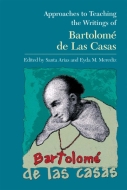
Approaches to Teaching the Writings of Bartolomé de Las Casas
The work of Bartolomé de Las Casas poses a number of challenges in the classroom: students need help seeing the relevance of a sixteenth-century Dominican missionary to their lives, understanding his colonial-imperial context, and negotiating the apparent contradictions among his evangelizing and his varying stances on Indian and black slavery in the New World. The essays gathered in this volume show teachers how to introduce and engage with Las Casas—one of the first voices to criticize European treatment of the native populations of the Americas and crucial today to studies of imperialism, colonialism, and human rights—in a wide range of courses, undergraduate and graduate.
Like all volumes in the Approaches series, this collection includes a convenient survey of original and supplementary materials and a comprehensive array of classroom tactics. The first group of essays incorporates Las Casas into the interdisciplinary classroom, while the next group focuses on teaching the Las Casas text most widely used in literature courses: the Brevísima relación de la destrucción de las Indias, a dramatic, largely firsthand view of colonial violence. The essays that follow explore the Spanish friar’s letters, treatises, and petitions to the Crown; locate his connection to such broader issues as independence movements in Latin America, inter-European politics, abolition, and human rights; and suggest ways of teaching him alongside colonial figures such as Christopher Columbus and within the literary traditions of a variety of nations and languages.
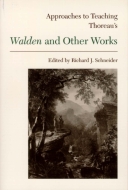
Approaches to Teaching Thoreau’s Walden and Other Works
In a recent survey of college teachers, Walden was mentioned more frequently than any other work as a text regularly included in nineteenth-century American literature courses. Today’s students are as likely to encounter Thoreau in freshman composition classes as they are in upper-level environmental literature seminars. “The challenge of teaching Thoreau, then,” Richard J. Schneider says, “is how to make most effective use of his obvious appeal amid the variety of possible course structures, critical theories, and pedagogical methods.”
