Approaches to Teaching World Literature
There are 173 products in Approaches to Teaching World Literature
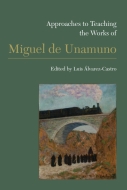
Approaches to Teaching the Works of Miguel de Unamuno
A central figure of Spanish culture and an author in many genres, Miguel de Unamuno (1864–1936) is less well known outside Spain. He was a surprising writer and thinker: a professor of Greek who embraced metafiction and modernist methods, a proponent of Castilian Spanish although born in the Basque Country and influenced by many international writers, and an early existentialist who was yet religious. He found himself in opposition to both King Alfonso XIII and the military dictatorship of Miguel Primo de Rivera and then became involved in the political upheaval that led to the Spanish Civil War.
Part 1 of this volume, “Materials,” gives information on different editions and translations of Unamuno’s works, on scholarly and critical secondary sources, and on Web resources. The essays in part 2, “Approaches,” offer suggestions for introducing students to the range of his works—novels, essays, poetry, and drama—in Spanish language and literature, comparative literature, religion, and philosophy classrooms.
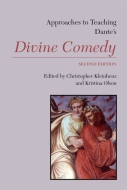
Approaches to Teaching Dante’s Divine Comedy, second edition
Dante’s Divine Comedy can compel and shock readers: it combines intense emotion and psychological insight with medieval theology and philosophy. This volume will help instructors lead their students through the many dimensions—historical, literary, religious, and ethical—that make the work so rewarding and enduringly relevant yet so difficult.
Part 1, “Materials,” gives instructors an overview of the important scholarship on the Divine Comedy. The essays of part 2, “Approaches,” describe ways to teach the work in the light of its contemporary culture and ours. Various teaching situations (a first-year seminar, a creative writing class, high school, a prison) are considered, and the many available translations are discussed.
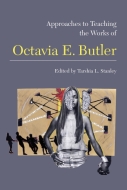
Approaches to Teaching the Works of Octavia E. Butler
Octavia E. Butler’s works of science fiction invite readers to consider the structures of power in society and to ask what it means to be human. Butler addresses social justice issues such as poverty, racism, and violence against women and connects the history of slavery in the United States with speculation on a biologically altered future world.
The first section of this volume, “Materials,” lists secondary sources and interviews with Butler and suggests texts that instructors might pair with her works. Essays in the second section, “Approaches,” situate Butler in science fiction, modernism, and Afrofuturism and provide interdisciplinary approaches from political science, philosophy, art, and digital humanities. The contributors present strategies for teaching Butler in literature courses as well as courses designed for adult learners, preservice teachers, and students at historically black colleges and universities.
Idaho State University Teaching Literature Book Award Winner
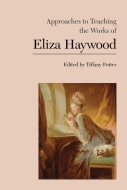
Approaches to Teaching the Works of Eliza Haywood
During her long and varied career, Eliza Haywood acted onstage, worked as a publisher and bookseller, and wrote prolifically in many genres, from novels of seduction to essays in periodicals. Her works illuminate the private emotional lives of people in eighteenth-century England, invite readers to consider how women in that culture defined themselves and criticized oppression, and help us better understand the social debates of the period.
This volume addresses a broad range of Haywood’s works, providing literary and sociopolitical context from writings by Aphra Behn, Samuel Richardson, Samuel Johnson, and others, and from contemporary documents such as advice manuals and court records. The first section, “Materials,” identifies high-quality editions, reliable biographical sources, and useful background information. The second section, “Approaches,” suggests ways to help students engage with Haywood’s work, gain a nuanced understanding of the time period, work with primary documents, and participate in digital humanities projects.
Approaches to Teaching the Works of Flannery O’Connor
Known for her violent, startling stories that culminate in moments of grace, Flannery O’Connor depicted the postwar segregated South from a unique perspective. This volume proposes strategies for introducing students to her Roman Catholic aesthetic, which draws on concepts such as incarnation and original sin, and offers alternative contexts for reading her work.
Part 1, “Materials,” describes resources that provide a grounding in O’Connor’s work and life. The essays in part 2, “Approaches,” discuss her beliefs about writing and her distinctive approach to fiction and religion; introduce fresh perspectives, including those of race, class, gender, and interdisciplinary approaches; highlight her craft as a creative writer; and suggest pairings of her works with other texts. Alice Walker’s short story “Convergence” is included as an appendix.
Approaches to Teaching Gaines’s The Autobiography of Miss Jane Pittman and Other Works
The Autobiography of Miss Jane Pittman tells the story of a woman, a community, and the African American experience from the Civil War through Jim Crow to the civil rights movement. This narrative and Gaines’s other novels and short stories explore the life of blacks in the South, their religious traditions and folkways, and their struggles under oppression. The southern communities described are diverse: blacks, creoles of color, poor whites, and wealthy landowners.
Part 1 of this volume provides biographical information about Ernest Gaines and a discussion of critical and background studies of his narrative. The essays in part 2 will help teachers of African American literature, American literature, and southern literature convey to their students various aspects of Gaines’s work and the adaptations of it in relation to southern literature, history, music, folk culture, and vernaculars of English.
Approaches to Teaching the Works of David Foster Wallace
David Foster Wallace’s works engage with his literary moment—roughly summarized as postmodernism—and with the author’s historical context. From his famously complex fiction to essays critical of American culture, Wallace’s works have at their core essential human concerns such as self-understanding, connecting with others, ethical behavior, and finding meaning. The essays in this volume suggest ways to elucidate Wallace’s philosophical and literary preoccupations for today’s students, who continue to contend with urgent issues, both personal and political, through reading literature.
Part 1, “Materials,” offers guidance on biographical, contextual, and archival sources and critical responses to Wallace’s writing. The essays in part 2, “Approaches,” discuss teaching key works and genres in high school settings, first-year undergraduate writing classes, American literature surveys, seminars on Wallace, and world literature courses. They examine Wallace’s social and philosophical contexts and contributions, treating topics such as gender, literary ethics, and the culture of writing programs.
Approaches to Teaching the Works of Amitav Ghosh
The prizewinning author of novels, nonfiction, and hybrid texts, Amitav Ghosh grew up in India and trained as an anthropologist. His works have been translated into over thirty languages. They cross and mix a number of genres, from science fiction to the historical novel, incorporating ethnohistory and travelogue and even recuperating dead languages. His subjects include climate change, postcolonial identities, translocation, migration, oceanic spaces, and the human interface with the environment.
Part 1 of this volume discusses editions of Ghosh’s works and the scholarship on Ghosh. The essays in part 2, “Approaches,” present ideas for teaching his works through considerations of postcolonial feminism, historicity in the novels, environmentalism, language, sociopolitical conflict, genre, intersectional reading, and the ethics of colonized subjecthood. Guidance for teaching Ghosh in different contexts, such as general education, world literature, or single-author classes, is provided.
Approaches to Teaching Langland’s Piers Plowman
A series of dream visions, Piers Plowman is a moral reckoning of the whole of medieval England, in which every part of society—from church and king to every sort of “folk”—is considered in the light of the narrator’s interpretation of Christian revelation. The Middle English poem, rich and beautiful, is a particular challenge to teach: it exists in three versions, lacks a continuous narrative, is written in a West Midlands dialect, weaves a complex allegory, and treats complicated social and political issues, such as labor, Lollardy, and popular uprising.
Part 1 of this volume, “Materials,” discusses the different versions, critical and classroom editions, and translations of the poem, as well as the many secondary sources. Part 2, “Approaches,” helps students engage with the poem’s versification, understand its protagonist and its treatment of poverty and equity, and discern connections to the work of other medieval poets, such as Dante and Chaucer.
Approaches to Teaching the Works of Christine de Pizan
A prolific poet and a protofeminist, Christine de Pizan worked within a sophisticated late medieval court culture and formed an identity as an authority on her society’s preoccupations with religion, politics, and morality. Her works address various aspects of misogyny, the appropriate actions of rulers, and the ethical framework for social conduct. In addition to gaining a readership in fifteenth-century France, Christine’s works influenced writers in Tudor England and were identified by twentieth-century readers as important contributions both to the emergence of a professional literary class and to the intellectual climate that gave rise to early modern Europe.
Part 1 of this volume, “Materials,” surveys the editions in Middle French, translations into modern French and English, and the many scholarly resources and critical reactions of the past fifty years. Part 2, “Approaches,” provides insights into various aspects of Christine’s works that can be explored with students, from considerations of genre and form to the themes of virtue, history, and memory. Teachers of French, English, world literature, and women’s studies will find useful ideas throughout the volume.
