Approaches to Teaching World Literature
There are 173 products in Approaches to Teaching World Literature
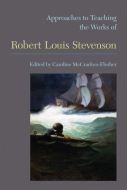
Approaches to Teaching the Works of Robert Louis Stevenson
Although Robert Louis Stevenson was a late Victorian, his work—especially Treasure Island and The Strange Case of Dr. Jekyll and Mr. Hyde—still circulates energetically and internationally among popular and academic audiences and among young and old. Admired by Henry James, Vladimir Nabokov,
and Jorge Luis Borges, Stevenson’s fiction crosses the boundaries of genre and challenges narrow definitions of the modern and the postmodern.
Part 1 of this volume, “Materials,” provides an introduction to the writer’s life, a survey of the criticism of his work, and a variety of resources for the instructor. In part 2, “Approaches,” thirty essays address such topics as Stevenson’s dialogue with James about literature; his verse for children; his Scottish heritage; his wanderlust; his work as gothic fiction, as science fiction, as detective fiction; his critique of imperialism in the South Seas; his usefulness in the creative writing classroom; and how Stevenson encourages expansive thinking across texts, times, places, and lives.
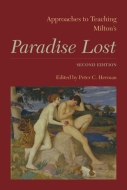
Approaches to Teaching Milton’s Paradise Lost
This second edition of Approaches to Teaching Milton’s Paradise Lost addresses Milton in the light of the digital age, new critical approaches to his poem, and his continued presence in contemporary culture. It aims to help instructors enliven the teaching of Paradise Lost and address the challenges presented to students by the poem—the early modern syntax and vocabulary, the political and theological contexts, and the abounding classical references.
The first part of the volume, “Materials,” evaluates the many available editions of the poem, points to relevant reference works, recommends additional reading, and outlines useful audiovisual and online aids for teaching Milton’s epic poem. The essays in the second part, “Approaches,” are grouped by several themes: literary and historical contexts, characters, poetics, critical approaches, classrooms, and performance. The essays cover epic conventions and literary and biblical allusions, new approaches such as ecocriticism and masculinity studies, and reading Milton on the Web, among other topics.
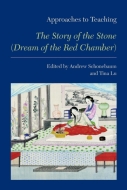
Approaches to Teaching The Story of the Stone (Dream of the Red Chamber)
The Story of the Stone (or Dream of the Red Chamber), a Chinese novel by Cao Xueqin and continued by Gao E, tells of an amazing garden, of a young man’s choice between two beautiful women, of his journey toward enlightenment, and of the moral and financial decline of a powerful family. Published in 1792, it depicts virtually every facet of life in eighteenth-century China—and has influenced culture in China ever since.
Part 1 of this volume, “Materials,” provides information and resources that will help teachers and students begin and pursue their study of Stone. The essays that constitute part 2, “Approaches,” introduce major topics to be covered in the classroom: Chinese religion, medicine, history, traditions of poetry, material culture, sexual mores, servants, Stone in film and on television, and the formidable challenges of translation into English that were faced by David Hawkes and then by John Minford.
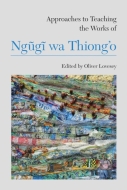
Approaches to Teaching the Works of Ngũgĩ wa Thiong’o
Ngũgĩ wa Thiong’o is one of the most important and celebrated authors of postindependence Africa as well as a groundbreaking postcolonial theorist. His work, written first in English, then in Gĩkũyũ, engages with the transformations of his native Kenya after what is often termed the Mau Mau rebellion. It also gives voice to the struggles of all Africans against economic injustice and political oppression. His writing and activism have continued despite imprisonment, the threat of assassination, and exile.
Part 1 of this volume, “Materials,” provides resources and background for the teaching of Ngũgĩ’s novels, plays, memoirs, and criticism. The essays of part 2, “Approaches,” consider the influence of Frantz Fanon, Karl Marx, and Joseph Conrad on Ngũgĩ; how the role of women in his fiction is inflected by feminism; his interpretation and political use of African history; his experimentation with orality and allegory in narrative; and the different challenges of teaching Ngũgĩ in classrooms in the United States, Europe, and Africa.
Approaches to Teaching the Works of Naguib Mahfouz
Naguib Mahfouz is the Arab world’s best-known writer and the single most important chronicler and analyst of twentieth-century Egypt. He was awarded the Nobel Prize in Literature in 1988, and since then his work has been increasingly studied in North American university classrooms. This first volume in the MLA series Approaches to Teaching World Literature to focus on an Arab author or Arabic literature provides an introduction to Mahfouz.
In part 1, “Materials,” the editors discuss Mahfouz’s background, influence, and critical reception. In part 2, “Approaches,” the volume’s contributors offer information, resources, and insights for teaching his work. Topics covered include the Arabian Nights tradition in Mahfouz’s work, the challenge of teaching Mahfouz in English translation, the Nasserite intellectual in The Beggar, the image of Alexandria in Miramar, the bitterness of British occupation in Midaq Alley, and the quest of Sufism in “Zaabalawi.”
Approaches to Teaching the Works of François Rabelais
The works of François Rabelais—Gargantua, Pantagruel, the Tiers livre, and the Quart livre—embody the Renaissance spirit of discovery and are crucial to the development of early modern prose and to the birth of the novel. Rabelais’s exuberant satire deals not only with the major cultural and intellectual issues of his time but also with issues of interest to students today.
This volume, in the MLA series Approaches to Teaching World Literature, suggests the materials that can be used in teaching Rabelais: editions, translations, criticism, Web sites, music, artwork, and films. Thirty-four essays present strategies for the classroom, discussing the classical and biblical allusions; the context of humanism and evangelical reform; various themes (giants, monsters, war); both feminism and masculinity as vexing subjects; Rabelais’s erudition; and the challenges of teaching his inventive language, his ambiguity, and his scatology.
Approaches to Teaching H.D.’s Poetry and Prose
The poet Hilda Doolittle (H.D.) came on the literary scene in the 1910s as a young American expatriate living in England. Her early lyric poems, in Sea Garden, helped launch the free verse movement known as imagism. Her work as a whole, spanning five decades, includes long narrative poems, novels, memoirs, and translations. Her experience of the two world wars in Europe is felt throughout her oeuvre, much of which focuses on the power and destructiveness of war. Other recurring topics are ancient models of civilization, comparative mythology, and female deities suppressed in the modern era.
Since the 1970s, H.D.’s poetry and prose have appeared regularly on undergraduate and graduate syllabi, in courses ranging from American or British modernism and gender and sexuality studies to literature of war and classical literature and mythology. Yet her work—complex and densely allusive—can be difficult for students to comprehend and for instructors to teach. This volume aims to assist instructors in helping their students navigate the intricacies of H.D.’s work and overcome some of the frustration of deciphering modern poetry. The first part, “Materials,” presents resources useful to instructors of H.D.’s work, and the second part, “Approaches,” offers specific ways to teach her wide-ranging corpus. Contributors describe courses that teach H.D. in the context of modernism, alongside such writers as Ezra Pound, T. S. Eliot, and Gertrude Stein. Others follow the themes of myth and religion in her long epic poems Helen in Egypt and Trilogy and her autobiographical work The Gift. H.D.’s analysis with Freud and her subsequent memoir of the experience find their place in a course on critical theory. Many instructors teach H.D. through the lens of sexuality, feminism, or race; others use interdisciplinary approaches that focus on H.D.’s engagement with film.
Approaches to Teaching the Poetry of John Gower
A poet who wrote fluently in Middle English, Anglo-French, and Latin, John Gower typifies the English Middle Ages. His economical and sober style, the topics he addressed—marriage, love, chivalry, social class, law, and religious faith—and the depth and breadth of his references to earlier literature, myth, and folktale made his work attractive not only to contemporaries such as Chaucer but also to later poets such as Spenser, Shakespeare, and Milton. Gower is increasingly acknowledged as a poet whose texts offer unique opportunities to teachers wishing to introduce their students to the riches of medieval literature and culture.
The essays in part 1, “Materials,” review the available editions and translations of Gower’s works, compile useful electronic resources for teaching, and discuss the sources and analogues and critical work on his canon. In part 2, “Approaches,” contributors make recommendations for teaching the historical context of Gower’s writing, involving topics from estates theory and law to confession and medicine; for examining his language and rhetoric in the classroom, including reading his work aloud; and for studying his works in various theoretical and comparative ways, with a special focus on his relation to classical as well as other Middle English authors. A final section considers the various classroom contexts in which Gower is taught, from community college to graduate school.
Approaches to Teaching Faulkner’s As I Lay Dying
As I Lay Dying is considered by many both the most enigmatic and the most accessible of Faulkner’s major works. It is also the most dramatic; the journey of the Bundrens, a family of poor farmers in the South in the early twentieth century, unfolds like a one-act play, full of natural disaster and human madness. Taught in high school, college, and graduate courses, the novel lends itself to a wide range of interpretations, posing both challenges and opportunities for the instructor.
Part 1 of this Approaches volume, “Materials,” offers an extensive guide to reference materials helpful for both reading and teaching As I Lay Dying. In Part 2, “Approaches,” fourteen essays examine the historical, geographic, and cultural aspects of the novel; consider it as a modernist narrative; address such issues as gender, materiality, language, and family dynamics; and discuss the novel in comparative and intertextual terms. Teachers will find suggestions for course design, in-class exercises, and assignments to help students explore a variety of themes, including death and mourning, the role of the mother, work, and the relation between nature and culture.
Approaches to Teaching the Works of Tim O’Brien
“The works of Tim O’Brien are among the most significant recent contributions to a lengthy canon of war literature,” write the editors of this volume; they serve “as an ideal point of entry for discussions of war and its human impact.” The author of the highly acclaimed The Things They Carried, O’Brien is a Pulitzer Prize finalist and the winner of a National Book Award for Going After Cacciato.
This volume in the Approaches to Teaching series considers the range and depth of O’Brien’s writing, with an emphasis on works that focus on the Vietnam War. Part 1, “Materials,” provides information on O’Brien’s life and an overview of his literary output. It also directs readers to critical and reference works on subjects encountered in his writing. The twenty-three essays in part 2, “Approaches,” provide historical background on the Vietnam War; explore narrative issues in O’Brien’s works, such as the melding of fiction, nonfiction, and memoir; and suggest ideas for teaching the author’s works in a variety of classroom and conceptual settings (e.g., composition, American literature, war fiction, narrative theory, postmodernism).
